Why Your Brand Needs a New SEO Strategy for the AI Search Era
If you’ve noticed your website traffic dipping even though your rankings look fine, you’re not imagining things. The way people search is changing faster than at any point since Google itself launched — and the culprit is AI. Search engines like Google now answer most queries directly inside AI Overviews. Meanwhile, millions of people are skipping search entirely and asking ChatGPT, Perplexity, or Gemini instead. For marketers, this shift has created a new discipline that’s quickly becoming as important as traditional SEO: Generative Engine Optimization (GEO), also called AI Engine Optimization (AEO). If you’re not optimizing for it yet, here’s what you need to know — and how to start.
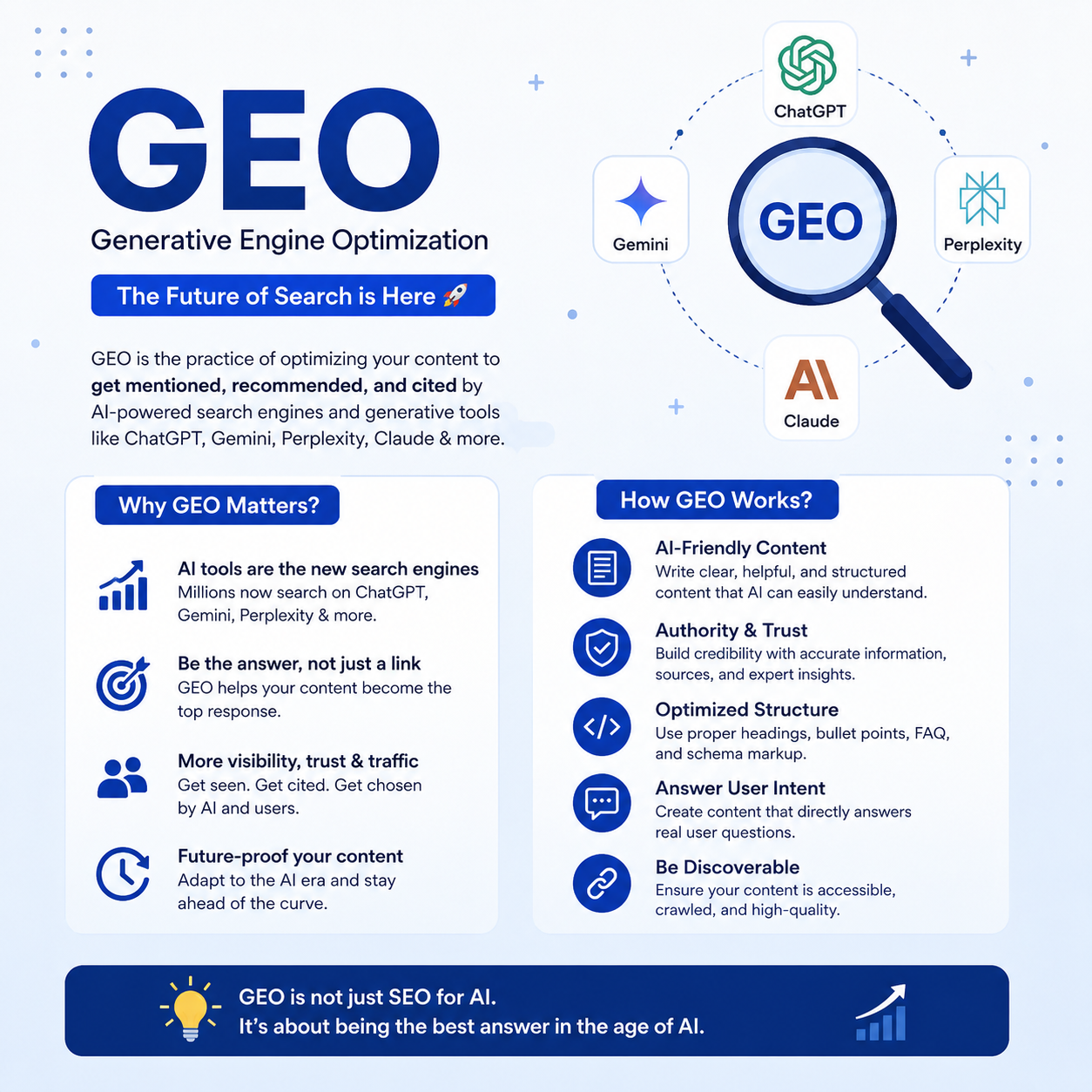
What Is Generative Engine Optimization?
Traditional SEO is built around one core idea: rank a page highly enough that a human clicks on it. GEO flips that model. Instead of optimizing purely for rankings, you’re optimizing for inclusion and citation inside AI-generated answers. When someone asks an AI assistant a question, the model pulls together information from multiple sources and generates a single, synthesized response — often without sending the user to any website at all. GEO is the practice of making sure your brand, product, or expertise is one of the sources that AI model chooses to cite, reference, or recommend. In short: SEO gets you found. GEO gets you quoted.